Security
What Can Someone Do with Your Phone Number?

Anthon Wansland
CMO & Founder
6 min
read
What can someone do with your phone number? More than most people realise.
Your phone number may seem harmless, but it can give scammers a direct route into your digital life. It is often connected to your bank accounts, email, social media profiles and verification codes, making it useful for phishing, account takeovers, identity theft and fraud.
In this guide, we explain why your phone number is valuable, how scammers can misuse it, and how to protect yourself.
Why Scammers Want Your Phone Number
Your phone number is more than just a way to contact you. It is often connected to your bank, email, social media accounts, delivery apps and loyalty programs.
That makes it useful for scammers. With your phone number, they may try to reset your passwords, access account recovery options or trick you into sharing verification codes.
Your number can also help scammers build a fuller picture of who you are. When combined with information from public records, data leaks or social media, it can be used for identity theft, loan fraud or targeted scams against you and people close to you.
Ways to Get Your Phone Number
Your phone number may be easier to find than you think. Even if you have removed it from public directories, it can still appear in data leaks, public records, apps or online databases.
Common ways scammers can find your phone number include:
Social media: Your phone number may be visible on platforms like Facebook, LinkedIn or other profiles without you realising it. Check how your profile looks to the public.
Data breaches: If a company is hacked, phone numbers can be part of the stolen data. These details may later be shared or sold on the dark web.
Public records: Court documents, property records, business registrations and other public databases can include contact details.
People search sites: Some websites collect personal information from different sources and make it searchable online. Many offer opt-out options, but you may need to remove your details manually.
Data brokers: Data brokers build consumer profiles using information from surveys, purchases, websites and other sources. Your phone number can be included without you knowing.
Online forms: Companies often ask for your phone number when you sign up, request a quote or contact support. Some may share that information with advertisers or third parties.
Contests and giveaways: Giveaways can be used to collect contact information. In some cases, they are legitimate marketing campaigns. In others, they are scams.
Mobile app permissions: Some apps ask for access to your contacts, call logs or personal details. That data can sometimes be used for marketing or shared with third parties.
SIM swapping: Scammers may use your personal information to convince your mobile provider to move your number to a new SIM card. If they succeed, they can receive your calls and text messages.
What Can People Do With Your Phone Number?
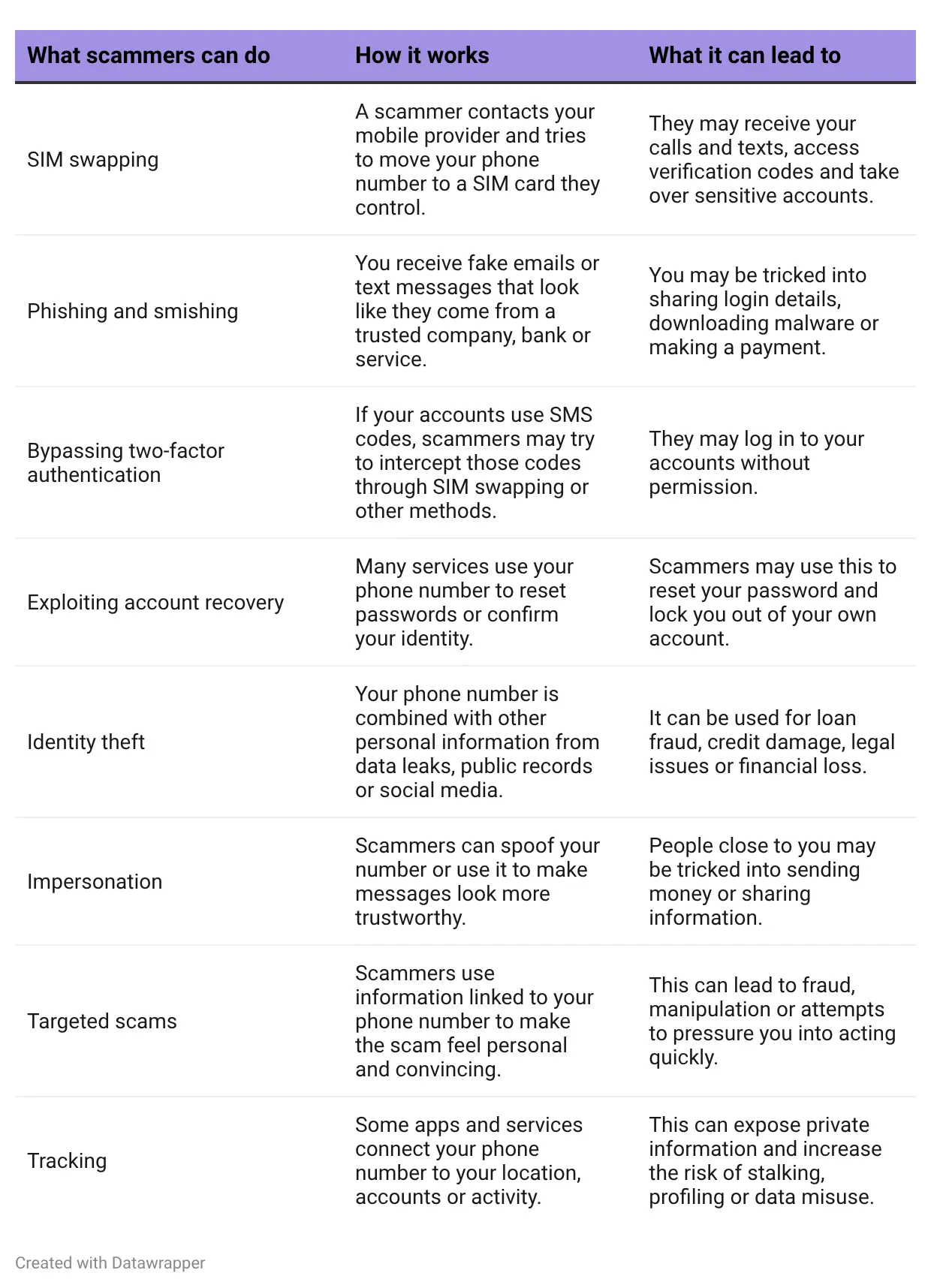
Once someone has your phone number, they can do more than send spam texts or make unwanted calls. Your number can be used as a starting point for scams, phishing attempts and attempts to access your accounts.
Here are some of the most common ways cybercriminals can misuse your phone number, and what the consequences can be.
How to Protect Your Phone Number
You cannot always control where your phone number ends up. But you can reduce how often it is exposed.
Share your number only when necessary: Avoid adding it to social media, job boards, forums, personal websites or other public profiles.
Think before entering your number online: Ask yourself if the website actually needs your phone number, or if email is enough.
Use your real number for important accounts only: Banking, insurance, healthcare and government services may need your real number. For less important sign-ups, consider another option.
Use a separate or alternative number when possible: A second number can help protect your main phone number from spam, scam calls and data breaches.
Check people-search sites: These sites collect personal details from public records, social media and marketing databases. Many allow you to opt out.
Remove your data from broker databases: Data brokers can store and sell profiles that include your phone number. Removing your details can reduce the risk of scams and identity theft.
Review app and account settings: Make sure your phone number is not publicly visible on profiles or shared with third parties.
Keep your main number private by default: The fewer places your phone number appears, the harder it is for scammers to connect it to your identity.
Also read: How to Delete Yourself from the Internet
How to Secure Your Device
Keeping your phone number private is important. But you should also make sure your device is protected.
Add a PIN to your SIM card: Your phone lock protects the device. A SIM PIN helps protect the SIM card itself and makes it harder for someone to use it in another phone.
Use fingerprint or face unlock: Biometric locks add an extra layer of protection if your phone is lost, stolen or accessed by someone else.
Use an authenticator app: Avoid SMS-based verification when possible. Apps like Google Authenticator or Microsoft Authenticator are safer for two-factor authentication.
Limit app permissions: Check which apps can access your contacts, location, camera, microphone and call logs. Remove permissions that are not needed.
Keep your phone updated: Install software updates and security patches as soon as they are available. Updates often fix known security weaknesses.
Use mobile security software: A trusted security app can help detect unsafe links, malware and suspicious activity on your device.
Also read: How to Know if Your Phone Is Hacked – 10 Signs
How to Tell if Your Phone Number Is Compromised
A compromised phone number is not always obvious. But there are warning signs you should take seriously:
You suddenly stop receiving calls or texts
Your phone shows no service without a clear reason
You receive login codes you did not request
You get alerts about password resets or new logins
Friends or family receive strange messages from your number
You notice unusual activity on your bank, email or social media accounts
If this happens, contact your mobile provider immediately and check your most important accounts for suspicious activity.
What to Do if a Scammer Has Your Phone Number
If you think your phone number is being misused, act quickly. Start with the accounts and services that could cause the most damage.
Contact your mobile provider: Ask them to check for SIM swap attempts, unauthorized changes or suspicious activity on your account. Add a PIN or passphrase if you do not already have one.
Change important passwords: Update passwords for your email, bank, social media and other sensitive accounts. Use strong, unique passwords for each account.
Turn off SMS-based verification where possible: Use an authenticator app instead of text message codes for two-factor authentication.
Scan your device for malware: Use trusted mobile security software to check for suspicious apps, unsafe files or malware.
Warn your contacts: Let friends, family or colleagues know that your number may be misused. Ask them to ignore strange messages, payment requests or links that appear to come from you.
Check your accounts for suspicious activity: Look for password reset emails, unknown logins, new devices, changed recovery details or transactions you do not recognise.
Report fraud or account takeovers: Report the incident to the relevant platform, your bank and local authorities. In the US, you can also report identity theft through IdentityTheft.gov.
Freeze your credit if financial fraud is a risk: If you think your personal details could be used to open loans or accounts, consider freezing your credit with the relevant credit bureaus.
The faster you respond, the harder it becomes for scammers to use your number to access accounts, impersonate you or commit fraud.
Also read: What Happens If Your Email Is on the Dark Web – And What to Do Next
Tools That Can Help Protect You
Good habits are the first step. But the right tools can add an extra layer of protection around your phone number, accounts and personal data.
Antivirus software: A trusted security app can help detect malicious downloads, phishing links, spyware and suspicious activity on your device.
Identity theft protection: These services monitor whether your personal information appears in risky places, such as data leaks or dark web databases. Some also offer recovery support if your identity is misused.
Password manager: A password manager helps you create and store strong, unique passwords for every account. This reduces the risk of one leaked password giving scammers access to multiple services.
Authenticator app: Apps like Google Authenticator or Microsoft Authenticator are safer than SMS codes for two-factor authentication. Use them where possible, especially for email, banking and social media.
Data removal services: These services can help remove your phone number and other personal details from data brokers and people-search sites. This can reduce exposure to spam, scam calls and targeted attacks.
Password strength checker: A password checker can help you see whether your password is easy to guess or has been used before. Avoid reusing old passwords, even with small changes.
Protect Your Phone Number With Serus
Your phone number is part of your digital identity. Serus helps you understand what personal information is exposed online, where it appears, and what risks it may create. With the right insight, you can take action before scammers do.
Want to know what’s actually out there about you? Serus helps you find out.
FAQ
Is it safe to give out your phone number?
It depends on who you share it with. Your phone number is personal information and can be connected to your accounts, identity and online activity. Only share it with trusted companies or services when it is actually needed.
Can a scammer do anything with just a phone number?
Yes. A phone number alone can be enough to send phishing texts, make scam calls or search for more information about you online. If combined with other leaked or public data, it can also be used for identity theft, account recovery abuse or SIM swapping attempts.
What can hackers do with a mobile number?
Hackers can use a mobile number to target you with smishing, impersonation scams and account takeover attempts. In more serious cases, they may try to intercept SMS verification codes, reset passwords or convince your mobile provider to move your number to a SIM card they control.